Back
Back













- Back
- Rewards



This article explores why root canal treatments in molars are more complex, and how to overcome common challenges such as curved canals, limited access, and higher failure rates, outlining practical solutions to help improve clinical outcomes, with insights from Adrian Stewart BDS, PGDip Endo(UCL), MSc(RestDent), MEndo, F(Endo)RCS Edinburgh.
Key Takeaways:
- Molar root canal treatment is more complex because of posterior access, curved canals and anatomical variation.
- MB2 canals are commonly missed in maxillary molars and may affect long-term prognosis.
- CBCT, magnification, apex locators, and flexible NiTi files can support diagnosis and navigation.
- Irrigation activation can help disinfect complex canal anatomy.
- A strong coronal seal and final restoration are essential to protect the treated molar.
Key Takeaways:
- Molar root canal treatment is more complex because of posterior access, curved canals and anatomical variation.
- MB2 canals are commonly missed in maxillary molars and may affect long-term prognosis.
- CBCT, magnification, apex locators, and flexible NiTi files can support diagnosis and navigation.
- Irrigation activation can help disinfect complex canal anatomy.
- A strong coronal seal and final restoration are essential to protect the treated molar.
Root canals can be problematic, even for the most experienced endodontists. Whether it’s navigating hard-to-reach or difficult canals, avoiding file breakage and perforation, or tackling patient anxiety, each dentist will face their own challenges when dealing with root canal treatments.
Studies have proven that root canals are most likely to fail when performed on molars, compared to other teeth. And the findings are significant: when assessing patients with symptomatic root canals, the affected tooth was a molar in over two thirds of cases.1
Why Are Root Canals Harder To Perform On Molars?
Understanding the issues that molars can present when performing root canals is the key to proper practice and successful treatment.
1. Molar canals are more complex than other teeth: With multiple canals that can be deep or heavily curved, extracting the tooth’s pulp can be a challenge. The posterior positioning of the molar can cause difficulty when accessing the tooth, making it harder to reach or visualise, and requiring specialised tools.
2. If improper tools are used, the risk of instrument separation, ledging or perforation increases: With an estimated 75% of perforations in molars resulting in tooth extraction,2 unsuccessful procedures can cause severe complications, which are often deeply upsetting – or even painful – for the patient.
3. Irrigation of the molar may be less effective in deep or curved canals: This can delay healing or cause infection or pain. In the UK, 53% of the population experience anxiety when visiting the dentist,3 so providing a comfortable, pleasant experience for patients by minimising the risk of post-treatment complications is incredibly important for retaining your client base.
4. Restorations can be more challenging: Ineffective restorations can compromise even the most perfectly executed root canals. Due to the increased force applied to molars, restorations must be strong and well-fitted to avoid future breakage, which can be especially difficult if there is minimal natural tooth remaining. Final crowns or fillings must perfectly match the patient’s bite for their comfort, but still be completed in a timely manner to reduce the risk of infection.
"Molar teeth present several challenges during Endodontic treatment. These include, but are not limited to:
- Variable and unpredictable canal anatomy – think MB2, mid-mesial canals, isthmuses between canals, and apical bifurcations.
- Canals are already narrow, but can become much more so over years of bruxism and restoration.
- Roots are very often curved, in three dimensions.
- Access can be difficult at the best of times, but can be much worse in a patient with reduced or limited opening."
Adrian Stewart BDS, PGDip Endo(UCL), MSc(RestDent), MEndo, F(Endo)RCS Edinburgh

"Molar teeth present several challenges during Endodontic treatment. These include, but are not limited to:
- Variable and unpredictable canal anatomy – think MB2, mid-mesial canals, isthmuses between canals, and apical bifurcations.
- Canals are already narrow, but can become much more so over years of bruxism and restoration.
- Roots are very often curved, in three dimensions.
- Access can be difficult at the best of times, but can be much worse in a patient with reduced or limited opening."
Adrian Stewart BDS, PGDip Endo(UCL), MSc(RestDent), MEndo, F(Endo)RCS Edinburgh
Root Canal Challenges At A Glance
| Challenge | Why It Matters | Tools Or Techniques That May Help |
|---|---|---|
| Curved canals | Higher risk of ledging, transportation or file stress | Glide path, flexible NiTi files |
| MB2 canals | Missed anatomy can affect prognosis | Magnification, CBCT where indicated |
| Posterior access | Reduced visibility and working space | Loupes, microscope, access planning |
| Irrigation difficulty | Apical third and isthmuses may be harder to disinfect | Irrigant activation |
| Restoration load | Molars face higher occlusal forces | Strong coronal seal and cuspal coverage |
What Tools Help Improve Molar Root Canal Outcomes?
As with any dental procedure, having the right tools is the key to success: you can only perform as well as your instruments do.
Visualising The Tooth And Navigating The Canal
To effectively assess the tooth, you need to be able to clearly see it in its entirety. The awkward molar positioning at the back of the mouth, narrow or hidden roots, and unexpected turns in the canal can present unforeseen challenges, so make sure you are working with loupes and a microscope that are best suited to you.
Ultimate Endo Guide
Ensure your endodontic treatments are well rounded and reliable with our complete step-by-step guide of the endodontic workflow, created to help you achieve the best outcomes for your patients.
Accessing the multiple roots and canals in molars can be difficult without the right products for canal detection and accurate length measurement. Advanced technologies in dentistry can offer a range of innovative solutions that are more effective than – but can be used in conjunction with – standard radiographs.
- Electronic Apex Locators (EALs): Offering increased accuracy compared to radiographs, EALs can effectively determine apical constriction or variations and detect root canal perforations, while simultaneously reducing the need for multiple X-rays: ideal for reducing radiation risk to the patient, increasing their comfort, and decreasing chair time.
Accessing the multiple roots and canals in molars can be difficult without the right products for canal detection and accurate length measurement. Advanced technologies in dentistry can offer a range of innovative solutions that are more effective than – but can be used in conjunction with – standard radiographs.
- Electronic Apex Locators (EALs): Offering increased accuracy compared to radiographs, EALs can effectively determine apical constriction or variations and detect root canal perforations, while simultaneously reducing the need for multiple X-rays: ideal for reducing radiation risk to the patient, increasing their comfort, and decreasing chair time.
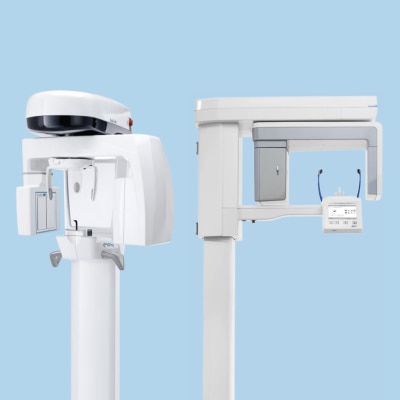
- CBCT Imaging Systems: Unlike traditional radiographs which offer 2D imaging, CBCT scanners provide 3D imaging of the tooth and surrounding structures, and can be used throughout the procedure for effective diagnosis, simplified navigation, and ongoing monitoring of the treatment site. Showing more than traditional X-rays can offer, CBCT scanners allow proper identification of canal curves or unexpected depth, giving you the opportunity to properly prepare for the treatment. Minimally invasive and more cost-effective than standard CT scanners, CBCT scanners can be a valuable tool for both dentists and patients.
3D Imaging
A CBCT scanner is a state-of-the-art scanning machine that is used to produce precise, high resolution 3D images of a patient’s mouth including the teeth, jaws, soft tissue and bones – all with high levels of detail.

Enhancing Irrigation
With the apical third of molar canals being harder to reach than other teeth, canals can be more easily missed during the irrigation step, leaving them harbouring bacteria. Using a combination of an effective irrigating solution and an advanced EndoActivator can decrease complications when removing pulp tissue, bacteria and debris from even the deepest parts of the canal.
- Irrigating Solutions: Using a combination of different irrigants ensures the canal is thoroughly cleaned and disinfected. The most widely used irrigant is Sodium Hypochlorite (NaOCl) which dissolves tissue and kills bacteria, and is often used alongside EDTA which removes the smear layer. However, there are alternatives available – such as chlorhexidine and citric acid – which may be better suited to you.
- EndoActivators: Designed to agitate and circulate irrigating solutions within the root canal system, EndoActivators help to ensure that irrigants reach all areas of the canal, including complex anatomy and isthmuses. While irrigating solutions can be used successfully alone, using them in conjunction with an EndoActivator ensures thorough debris removal and disinfection, resulting in reduced post-operative pain.
Reducing Instrumentation Issues
The success of a root canal treatment relies heavily on the selection of the correct files to remove infected tissue and debris, and shape the canal so it can be effectively disinfected and sealed. You must consider the tooth type, canal anatomy, and specific goals of the instrumentation, and ensure you are using them according to the manufacturer’s guidelines.
If you are unsure which file is best suited to your needs, speak to an expert for support. Optident’s EdgeEndo reps can provide their knowledge and expertise to ensure you are choosing the best tools for you and your patients.
Stainless Steel Or NiTi?
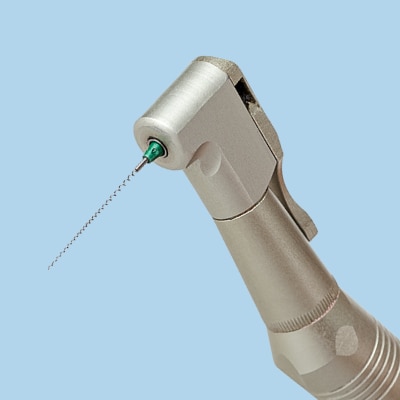
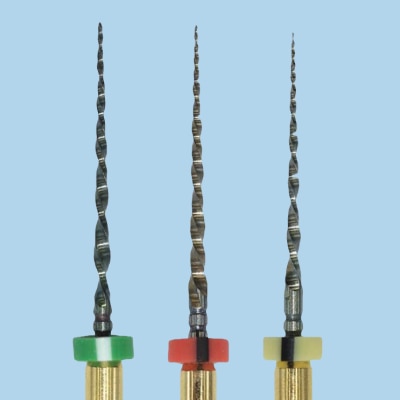
Stainless steel files remain a popular choice for many dentists due to their strength, and ease of use when navigating straight or simple canals. However, NiTi files provide greater flexibility, bending to navigate the canal – which can be especially valuable when treating molars – and reducing the risk of ledging, transportation, and perforation.
Using a combination of files can reduce the risk of file separation, which can pose an increased risk when navigating molars. Use a small stainless steel hand file to first establish a glide path before gently following with the NiTi file. The elasticity and consistent shaping of NiTi files allows them to maintain the original canal path and return to their former shape for a more uniform taper. Single-use files are a good option as reusable files can weaken after repeated use, increasing the risk of breakage.
Rotary Or Reciprocating?
Both rotary and reciprocating files have their pros and cons when it comes to performing root canals, and choosing the ‘right’ file is as much to do with individual preference as it is to do with the clinical case.
Rotary file systems, in which the file rotates down the canal to the apex uninterrupted, offer quick and efficient shaping which in turn reduces chair time and improves patient experience. Reciprocating file systems, where the file cuts in a back-and-forth motion, are simple to use, often more flexible, and have greater resistance to cyclic fatigue, making them an excellent choice for less experienced dentists.
Improving Obturation and Restoration
Choosing an effective sealer during root canal treatment can increase the success rate and preserve the remainder of the tooth. Traditionally, epoxy resin, ZOE-based (zinc oxide eugenol), calcium hydroxide, glass ionomer or silicone-based resins have been used by dentists, but these each present their own issues: from solubility and brittleness, to weak seals or adhesion.
- Bioceramic Sealers: Made from calcium silicate-based materials, bioceramic sealers are now the most commonly used sealer among endodontists,4 offering biocompatibility, antibacterial properties, and reduced shrinkage. Bioactive properties allow the sealer to bond chemically with dentine, for superior sealing of the tooth: essential for preservation of the remaining molar.
Improving Obturation and Restoration
Choosing an effective sealer during root canal treatment can increase the success rate and preserve the remainder of the tooth. Traditionally, epoxy resin, ZOE-based (zinc oxide eugenol), calcium hydroxide, glass ionomer or silicone-based resins have been used by dentists, but these each present their own issues: from solubility and brittleness, to weak seals or adhesion.
- Bioceramic Sealers: Made from calcium silicate-based materials, bioceramic sealers are now the most commonly used sealer among endodontists,4 offering biocompatibility, antibacterial properties, and reduced shrinkage. Bioactive properties allow the sealer to bond chemically with dentine, for superior sealing of the tooth: essential for preservation of the remaining molar.
Bioceramic Sealers And Warm Vertical Condensation (WVC)
WVC is a heat-based obturation technique which typically boasts excellent adaptation to canal walls and irregularities – ideal when treating complex molar canals – and ensures a tight seal.
Bioceramic sealers are sensitive to heat and are typically used with cold techniques, such as single cone, but this doesn’t mean they can’t be used with WVC, providing you have carefully considered the challenges. Controlling heat application is essential, as prolonged overheating can change the properties of the bioceramic sealer, causing degradation and treatment failure.
Bioceramic sealers are hydrophilic, requiring residual moisture in the dentine or canal to properly set, so you should avoid over-drying the tooth.
You should also assess the longevity of the treatment: if retreatment is likely to be required, bioceramic sealers may not be the optimal choice as they bond tightly to dentine. In such instances, you may find traditional sealers more effective for use with the WVC technique.
What Do Endodontic Experts Recommend For Complex Molar Cases?
Adrian Stewart (BDS, PGDip Endo(UCL), MSc(RestDent), MEndo, F(Endo)RCS Edinburgh) has an expansive industry knowledge and is familiar with the challenges molars can present, and how to overcome them.
"One of the biggest game changers for management of molar teeth has been the advent of ‘Shape Memory’ files. These files, which are more martensitic than the traditional NiTi alloys, are capable of being pre-curved, to aid insertion to the canal orifice in cases where access is limited.
Martensitic files are also more conservative of canal architecture, as they tend to follow the natural curves of the molar canals, rather than try to impose a shape upon them.
Another advantage is their tendency to ‘unwind’ before fracture. Careful inspection of the flutes between uses in a very tight canal can often reveal a file that is under stress, allowing the dentist to dispose of and replace it. With more austenitic alloys, very often, the first sign that the file is over-stressed is when it emerges from the canal 2mm shorter than it went in.
Currently, my file of choice is EdgeEndo X7 Utopia. In the 4% taper, it has a shorter working portion than many files, with a maximum diameter of 1mm. This is very conservative of the pericervical dentine, which is so important for prolonging the life of the tooth after RCT."
Adrian Stewart (BDS, PGDip Endo(UCL), MSc(RestDent), MEndo, F(Endo)RCS Edinburgh)

Despite the challenges, successful root canals can be performed on molars, provided each patient is treated on a case-by-case basis with careful consideration of which tools will be used for the treatment. If you are unsure which products would be best suited to you, speak to an industry expert, such as a Henry Schein Field Sales Consultant, who will be able to advise you further.
Speak to a Henry Schein expert here.
Browse our full range of endodontic products here.
1. Why are root canals more difficult in molars?


2. What tools can help dentists manage molar root canal treatments?
3. How can dentists reduce the risk of root canal failure in molars?
4. Why is visibility so important during molar root canal treatment?
5. How can irrigation be improved in deep or curved molar canals?
6. Are NiTi files useful for curved molar canals?
7. Can bioceramic sealers be used with warm vertical condensation?
2 https://dentistry.co.uk/2020/12/08/endodontic-research-root-canal/
3 https://www.dentalphobia.co.uk/
4 https://www.aae.org/specialty/retreatment-of-bioceramic-sealer-obturated-canals/#:~:text=Calcium%20silicate%2Dbased%20bioceramic%20sealers,using%20resin%20sealers%202%2D6